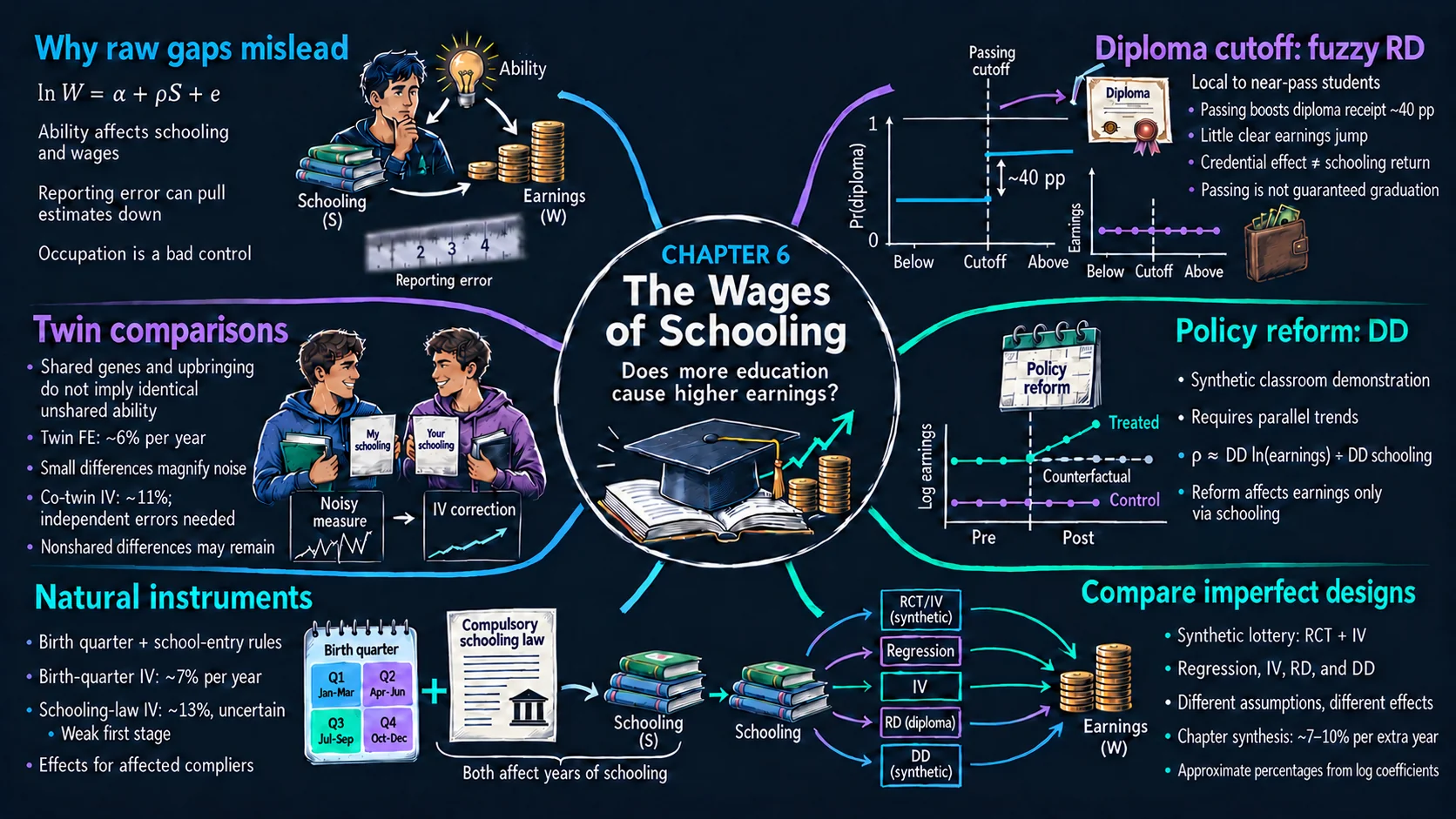
SIX CHAPTERS. A NEW WAY TO LISTEN.

AI Podcasts

Hear the question.
Follow the reasoning.

From a health insurance lottery to the value of a diploma, explore the stories behind causal inference. Listen at your own pace, jump to a section, or follow the conversation word by word.

Explore the episodes Explore Japanese version Start at Chapter 1, or follow your curiosity.
6 English episodes227 minutes of listeningRead along as you listen
YOUR FIRST LISTENCHAPTER 01 · 38:56
Randomized trials: an illustrated guide to health insurance experiments

A lottery. A fairer comparison.
A question with real consequences.

THE LISTENING COLLECTION

One chapter. One big question.

Meet the case. Follow the investigation.
Ask what the evidence can tell us.

Make it your conversation. Change the speed, revisit a section, or select Read along to follow the transcript. Each episode also opens on Spotify.

LISTEN · PAUSE · REFLECT

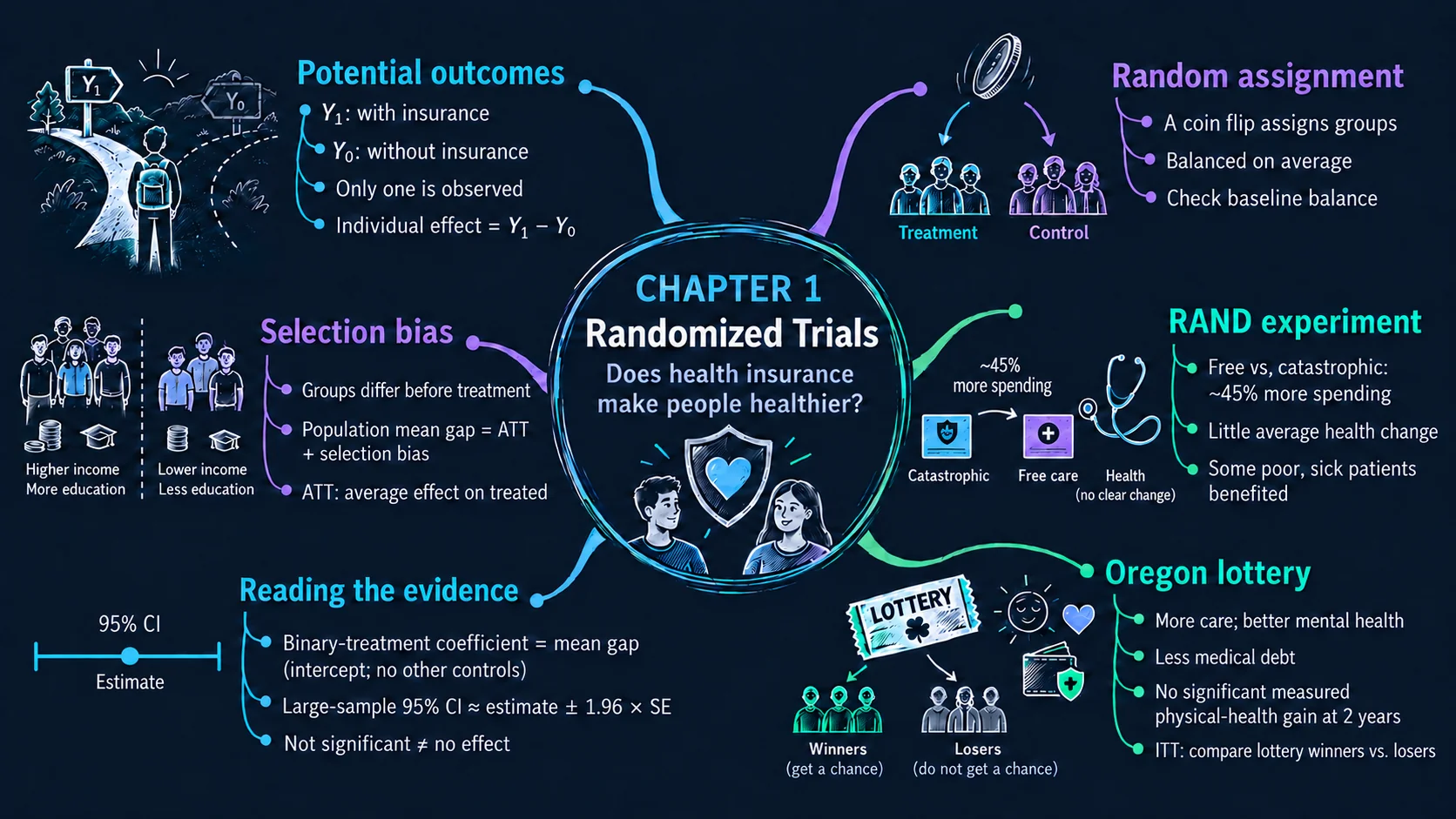
CHAPTER 1 / RANDOMIZED TRIALS

Does health insurance make people healthier?
38:56 duration
Illustrated chapter overview: Randomized TrialsExplore the mind map

People with health insurance often report better health. But did coverage make the difference? Follow the RAND experiment and Oregon lottery to see how random assignment helps separate the effect of insurance from the advantages people already have.

Listen for

  • Recognize selection bias in an ordinary comparison.
  • Distinguish an offer of insurance from receiving it.
  • Read health outcomes alongside their uncertainty.

AI podcast · 39 min

Chapter 1 · Randomized Trials

Now: Opening

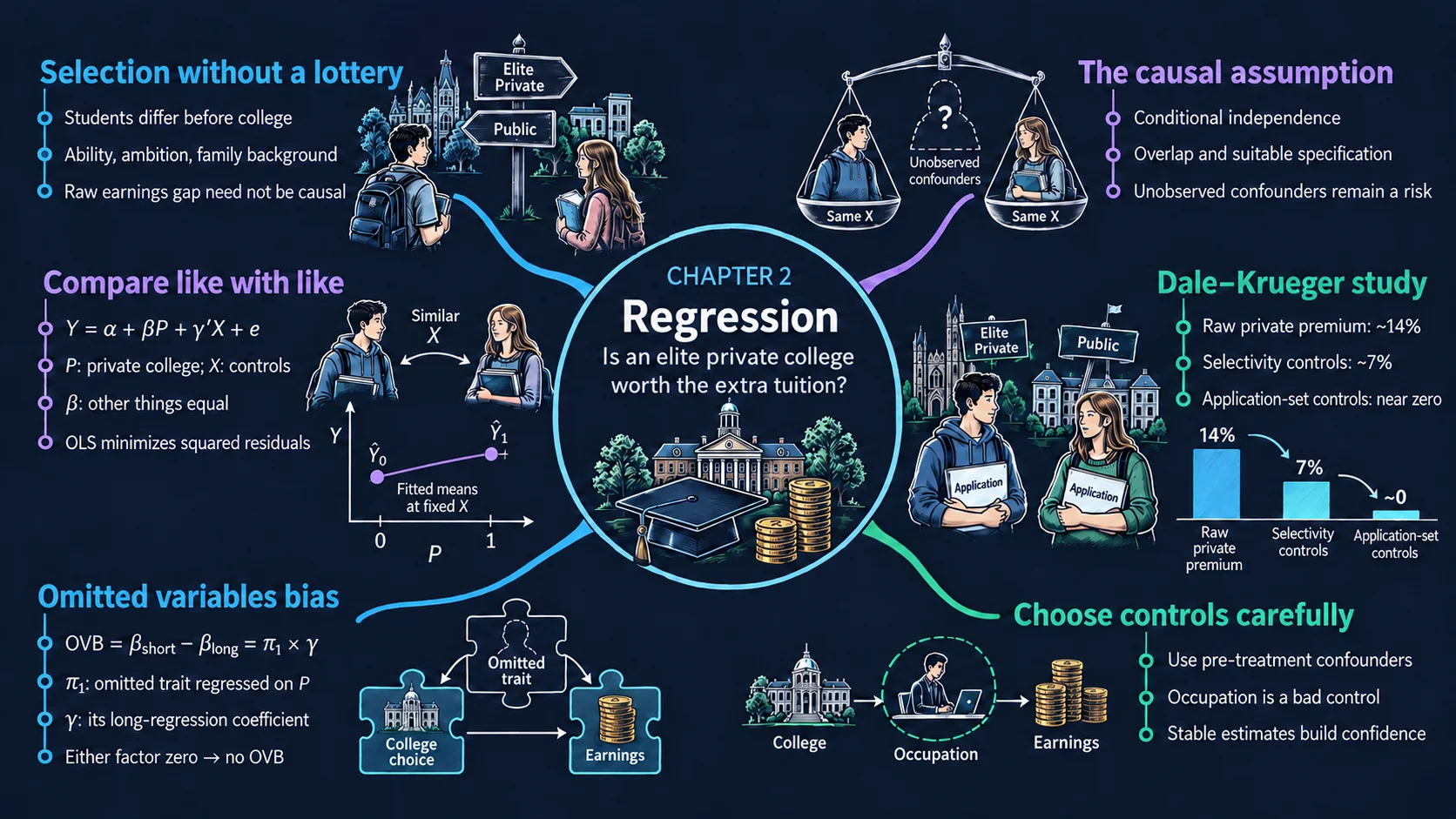
CHAPTER 2 / REGRESSION

Is an elite college worth the extra tuition?

39:31 duration
Illustrated chapter overview: RegressionExplore the mind map

Graduates of selective colleges tend to earn more. How much comes from the college, and how much came with the student? Explore controlled comparisons, college application patterns, and simulations that reveal what regression can—and cannot—resolve.

Listen for

  • Explain what it means to hold a variable fixed.
  • Trace the direction of omitted variables bias.
  • Recognize when an extra control changes the question.

AI podcast · 40 min

Chapter 2 · Regression

Now: Opening

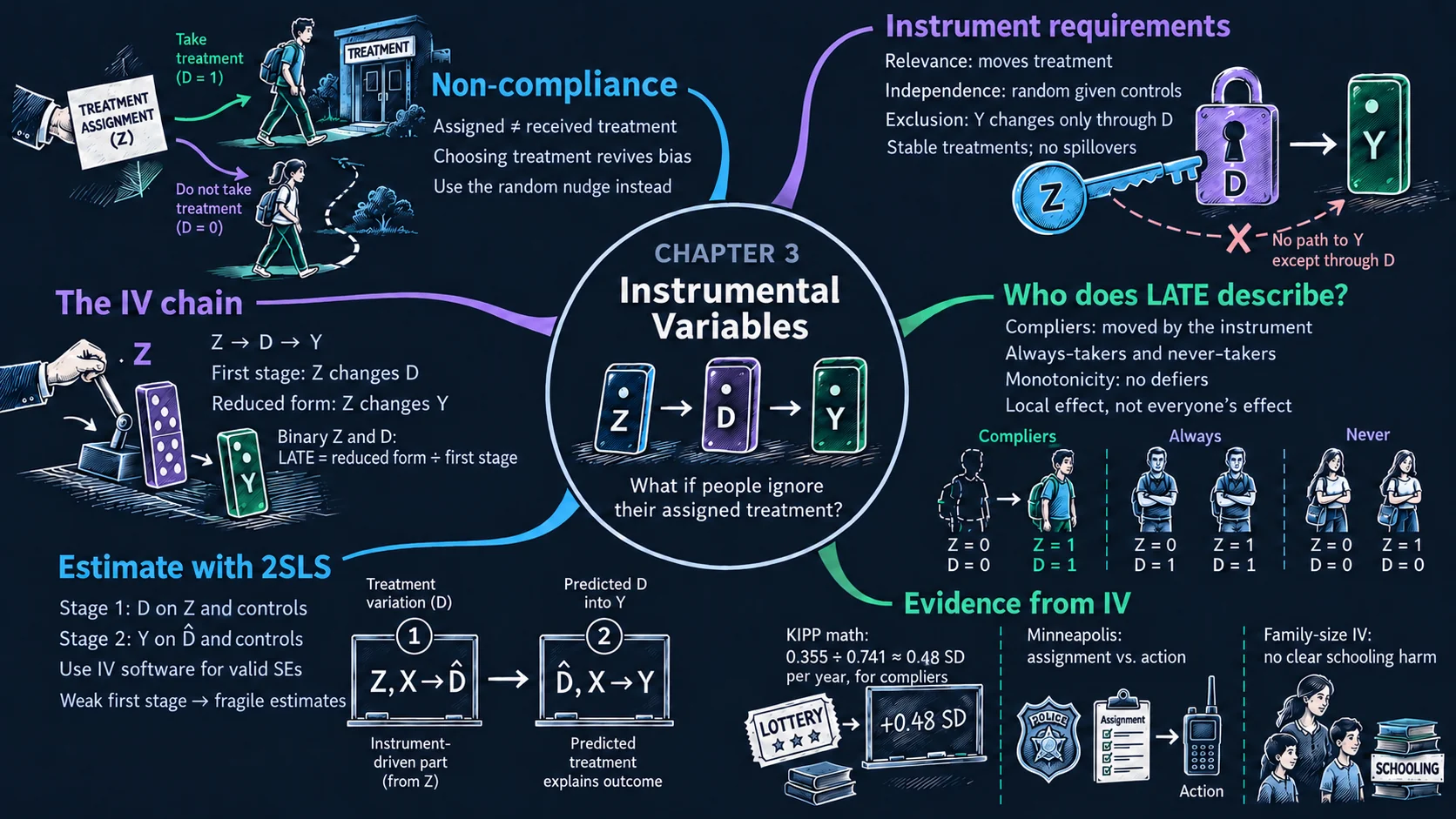
CHAPTER 3 / INSTRUMENTAL VARIABLES

What if people ignore their assigned treatment?

35:22 duration
Illustrated chapter overview: Instrumental VariablesExplore the mind map

A school lottery offers a place, but not every winner attends. Start with the difference between an offer and an action, then follow school, policing, and family-size examples to understand how a random influence can help identify a treatment effect.

Listen for

  • Connect the first stage, reduced form, and IV ratio.
  • Identify whose treatment effect the estimate describes.
  • Ask whether the instrument has another path to the outcome.

AI podcast · 35 min

Chapter 3 · Instrumental Variables

Now: Opening

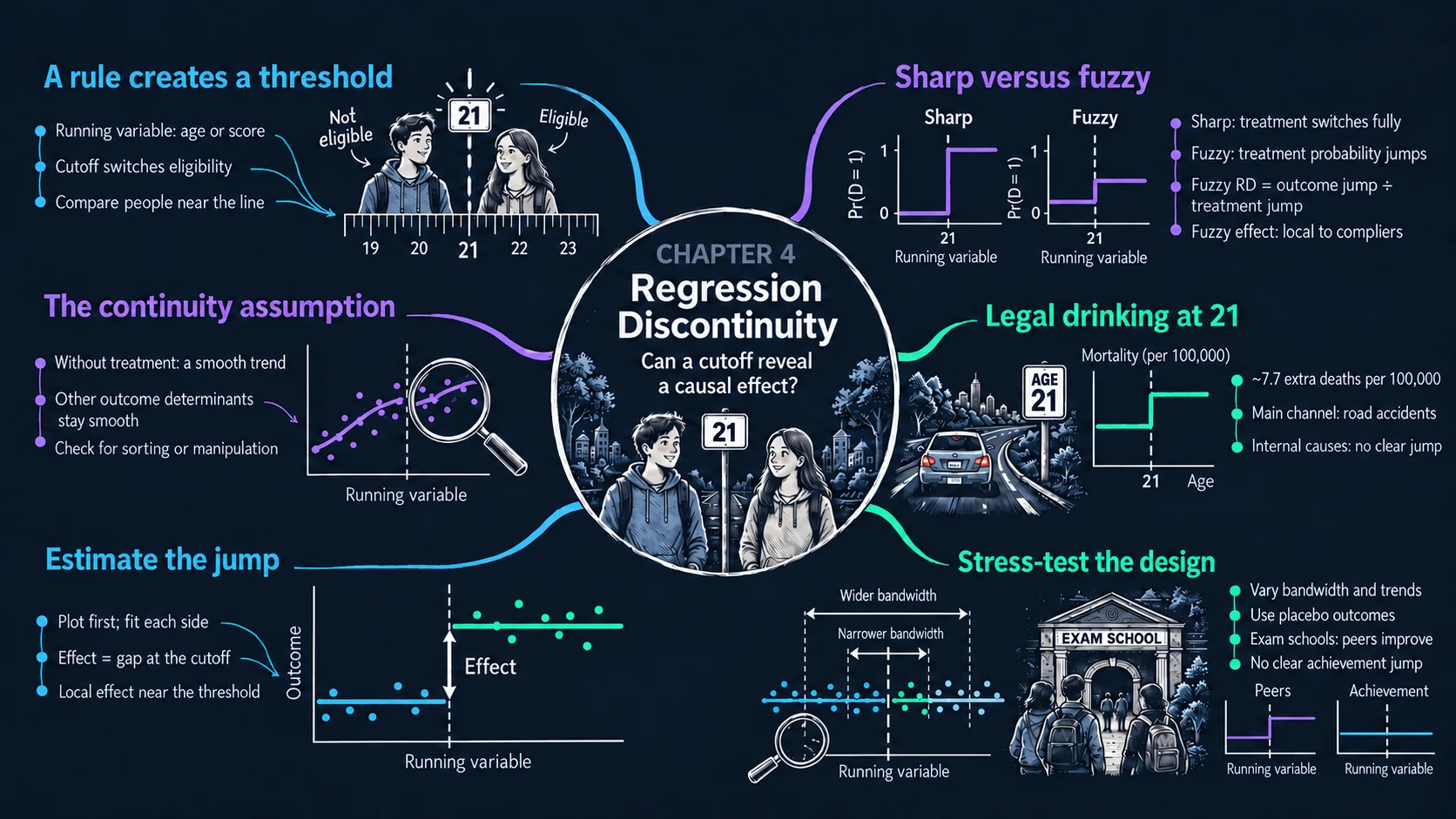
CHAPTER 4 / REGRESSION DISCONTINUITY

Can a birthday reveal the effect of alcohol access?

35:11 duration
Illustrated chapter overview: Regression DiscontinuityExplore the mind map

Legal access to alcohol changes at a cutoff; most other features of a person change gradually. Explore drinking-age rules and selective-school admissions to see when comparisons just above and below a threshold can support a causal claim.

Listen for

  • Explain why continuity near the cutoff matters.
  • Distinguish sharp from fuzzy discontinuity designs.
  • Describe the local population and limits of an estimated jump.

AI podcast · 35 min

Chapter 4 · Regression Discontinuity

Now: Opening

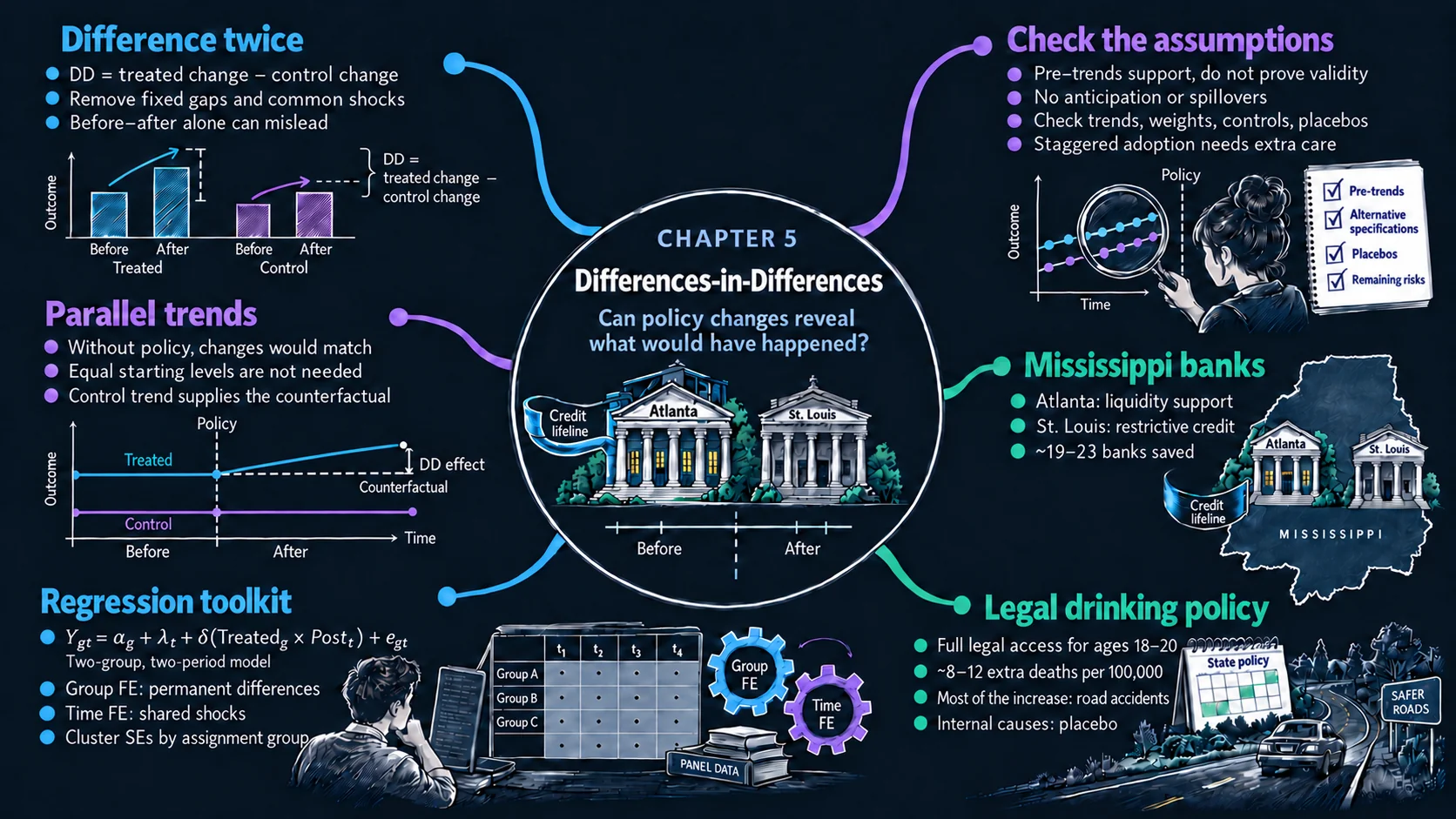
CHAPTER 5 / DIFFERENCES-IN-DIFFERENCES

Did emergency lending save banks?

31:55 duration
Illustrated chapter overview: Differences-in-DifferencesExplore the mind map

During the Great Depression, Mississippi banks faced a shared panic but different central-bank responses. Follow their changing fortunes, then examine drinking-age laws, to learn how a comparison group can help reconstruct what might have happened without a policy.

Listen for

  • Build a comparison from changes in two groups.
  • Explain the parallel-trends assumption.
  • Separate uncertainty checks from threats to the causal design.

AI podcast · 32 min

Chapter 5 · Differences-in-Differences

Now: Opening

CHAPTER 6 / THE WAGES OF SCHOOLING

Does more education cause higher earnings?

45:33 duration
Illustrated chapter overview: The Wages of SchoolingExplore the mind map

More schooling and higher wages often go together. Bring the course’s methods together through twins, birth timing, policy changes, and exam cutoffs—and ask how a return to learning differs from a return to a diploma.

Listen for

  • Recognize ability bias and measurement error.
  • Compare the assumptions behind different research designs.
  • Distinguish an extra year of schooling from a credential.

AI podcast · 46 min

Chapter 6 · The Wages of Schooling

Now: Opening